Jo, men Niclas Stenemo’s sångröst i starka svenska synthduon Kite (2008 – och on going) får mig att tänka på PK Keränen, sångaren i det gamla finska rockbandet 22 Pistepirkko (1980-2015). Det ljusa tonläget, och den lite nasala tonen. Borde de inte göra en duett med varandra? Både har ju en utmärkt känsla för catchy låtbygge. Hade förmodligen blivit en lite skruvad kaka på kaka röstmässigt, men nog en rätt sweet cookie ändå. Vi lyssnar på dem och jämför, kör två starka spår var.
Is it winter again, is it cold again, didn’t Frank just slip on the ice, didn’t he heal, weren’t the spring seeds planted
didn’t the night end, didn’t the melting ice flood the narrow gutters
wasn’t my body rescued, wasn’t it safe
didn’t the scar form, invisible above the injury
terror and cold, didn’t they just end, wasn’t the back garden harrowed and planted–
I remember how the earth felt, red and dense, in stiff rows, weren’t the seeds planted, didn’t vines climb the south wall
I can’t hear your voice for the wind’s cries, whistling over the bare ground
I no longer care what sound it makes
when I was silenced, when did it first seem pointless to describe that sound
what it sounds like can’t change what it is–
didn’t the night end, wasn’t the earth safe when it was planted
didn’t we plant the seeds, weren’t we necessary to the earth,
the vines, were they harvested?
2.
Summer after summer has ended, balm after violence: it does me no good to be good to me now; violence has changed me.
Daybreak. The low hills shine ochre and fire, even the fields shine. I know what I see; sun that could be the August sun, returning everything that was taken away —
You hear this voice? This is my mind’s voice; you can’t touch my body now. It has changed once, it has hardened, don’t ask it to respond again.
A day like a day in summer. Exceptionally still. The long shadows of the maples nearly mauve on the gravel paths. And in the evening, warmth. Night like a night in summer.
It does me no good; violence has changed me. My body has grown cold like the stripped fields; now there is only my mind, cautious and wary, with the sense it is being tested.
Once more, the sun rises as it rose in summer; bounty, balm after violence. Balm after the leaves have changed, after the fields have been harvested and turned.
Tell me this is the future, I won’t believe you. Tell me I’m living, I won’t believe you.
3.
Snow had fallen. I remember music from an open window.
Come to me, said the world. This is not to say it spoke in exact sentences but that I perceived beauty in this manner.
Sunrise. A film of moisture on each living thing. Pools of cold light formed in the gutters.
I stood at the doorway, ridiculous as it now seems.
What others found in art, I found in nature. What others found in human love, I found in nature. Very simple. But there was no voice there.
Winter was over. In the thawed dirt, bits of green were showing.
Come to me, said the world. I was standing in my wool coat at a kind of bright portal — I can finally say long ago; it gives me considerable pleasure. Beauty the healer, the teacher —
death cannot harm me more than you have harmed me, my beloved life.
4.
The light has changed; middle C is tuned darker now. And the songs of morning sound over-rehearsed. —
This is the light of autumn, not the light of spring. The light of autumn: you will not be spared.
The songs have changed; the unspeakable has entered them.
This is the light of autumn, not the light that says I am reborn.
Not the spring dawn: I strained, I suffered, I was delivered. This is the present, an allegory of waste.
So much has changed. And still, you are fortunate: the ideal burns in you like a fever. Or not like a fever, like a second heart.
The songs have changed, but really they are still quite beautiful. They have been concentrated in a smaller space, the space of the mind. They are dark, now, with desolation and anguish.
And yet the notes recur. They hover oddly in anticipation of silence. The ear gets used to them. The eye gets used to disappearances.
You will not be spared, nor will what you love be spared.
A wind has come and gone, taking apart the mind; it has left in its wake a strange lucidity.
How priviledged you are, to be passionately clinging to what you love; the forfeit of hope has not destroyed you.
Maestro, doloroso:
This is the light of autumn; it has turned on us. Surely it is a privilege to approach the end still believing in something.
5.
It is true that there is not enough beauty in the world. It is also true that I am not competent to restore it. Neither is there candor, and here I may be of some use.
I am at work, though I am silent.
The bland
misery of the world bounds us on either side, an alley
lined with trees; we are
companions here, not speaking, each with his own thoughts;
behind the trees, iron gates of the private houses, the shuttered rooms
somehow deserted, abandoned,
as though it were the artist’s duty to create hope, but out of what? what?
the word itself false, a device to refute perception — At the intersection,
ornamental lights of the season.
I was young here. Riding the subway with my small book as though to defend myself against
the same world:
you are not alone, the poem said, in the dark tunnel.
6.
The brightness of the day becomes the brightness of the night; the fire becomes the mirror.
My friend the earth is bitter; I think sunlight has failed her. Bitter or weary, it is hard to say.
Between herself and the sun, something has ended. She wants, now, to be left alone; I think we must give up turning to her for affirmation.
Above the fields, above the roofs of the village houses, the brilliance that made all life possible becomes the cold stars.
Lie still and watch: they give nothing but ask nothing.
From within the earth’s bitter disgrace, coldness and barrenness
my friend the moon rises: she is beautiful tonight, but when is she not beautiful?
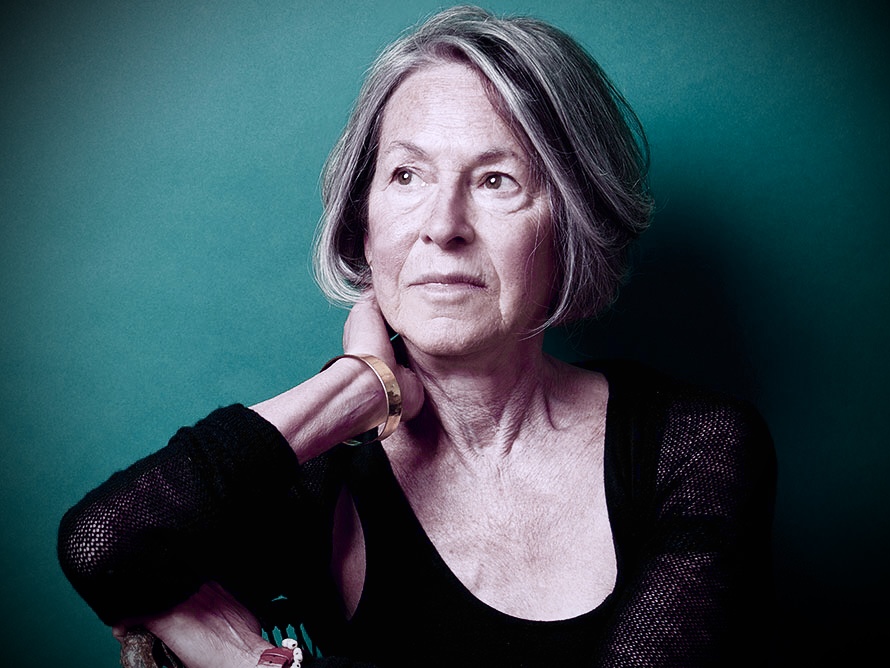
Ett lite ”stifft” men informativt samtal om nobelpristagaren i litteratur 2020: Louise Glück. Ur dagens Studio Ett, Sveriges Radio. Medverkande: Lisa Irenius, kulturchef på Svenska Dagbladet, Sara Abdollahi Lekta, essäist och kulturjournalist, Mikael Timm, författare och medarbetare på SR’s Kulturredaktion. Vidare Per Bergström, förläggare på Malmöförlaget Rámus som ger ut Glücks böcker i Sverige och Stewe Claeson, författare och översättare av hennes dikter.
Kanske kan det bli ett visst fokus på just spellistor och musik i den här loggfiguren framöver. Inte minst nu när Homepod står på plats. Det får bli som det blir.
Ett soundtrack till natten först ut. En spellista med 50 melodier som gagnar de sena timmarna. Shuffle mode – not allowed.Här lyssnas det bara rakt uppifrån och ned, ja från topp till tå. 3 timmar och 25 minuter – en ganska passande tidsrymd för ett avkopplande nattskift.
Anita Anitblom dog idag – 82 år gammal. Hon var född 14 december 1937 i Gävle, och dog i Mandelieu-la-Napoule i Frankrike. Jag finner ingen anledning att varken sluta lyssna på hennes prima sånger, eller att ta ett och annat bloss. RIP, Anita. Tack för alla glädjestunder!
Cigarettes, cigarettes! Rök en god cigarett! Om du är en stressad slav🎵 Ta ett bloss och koppla av Cigarettes, 🎶cigarettes Ta en till cigarett Om du inte har nån glöd Har jag eld 🔥 i överflöd Dra ett bloss och blås ut Dra ett till – bara njut!🎵 Du har chansen till stimulans Om du har 🎵cigarettes till hands La la la la la la (Cigarettes, cigarettes, cigarettes) La la la la la la (Cigarettes, cigarettes, cigarettes) Oh, du har chansen till stimulans🎶 Om du har cigarettes till hands Cigarettes, cigarettes 🎵Rök en god cigarett Om du är en stressad slav Ta ett bloss och koppla av
(Instrumental)🎵
Dra ett bloss och 🎶blås ut Dra ett till bara njut Du har chansen till stimulans Om du har 🎵cigarett till hands Cigarettes, cigarettes Rök en fin cigarett Njut en aning av din nikotin Dina nervers medicin🎵 Cigarettes, cigarettes Bara en cigarett Ta det 🎶lugnt en liten stund Med en cigarett i mun (Cigarettes, cigarettes, 🎵cigarettes) Kom och rök cigarettes med mig! – Cigarettes, min herre!

 L O G G F I G U R